

Food & Climate
A number of Nepalese farmers have succeeded in using rice straw to resist drought and reduce water consumption in agricultural land, positively impacting the incomes of these marginalized areas.
This is part of a series of practices enabling Nepalese farmers to succeed through sustainable agriculture, after learning about it in field schools, according to a statement received by “Food & Climate” platform.
Farmers in Nepal, like others around the world, used to burn rice straw to dispose of it before they began using it to conserve soil water as a sustainable agriculture method to combat climate change.
One of the Nepalese farmers who has benefited from sustainable farming methods, such as the use of rice straw, is Khilamaya Nepali, who has adopted a new method for pest control.
Controlling Fly Populations
Khilamaya Nepali, a Nepalese farmer, explains the new pest control method, saying, “Look, this is a male fly. We made a trap that captures the males using a specific chemical. We do this to keep the fly population under control. We learned this method in a training course organized by the field school”.
Nepali gained new skills by participating in the Farmer Field School on Natural Resource Management, where she and a group of other farmers work collectively on a plot of land located in Udayapur District in southeastern Nepal.
The Farmer Field School is a key component of the “Building Resilient Communities in Churia District, Nepal” project, funded by the Green Climate Fund and implemented in partnership between the Food and Agriculture Organization of the United Nations (FAO) and the Government of Nepal.
This project enables farmers to find solutions to the growing climate change-related challenges facing agriculture in the region.
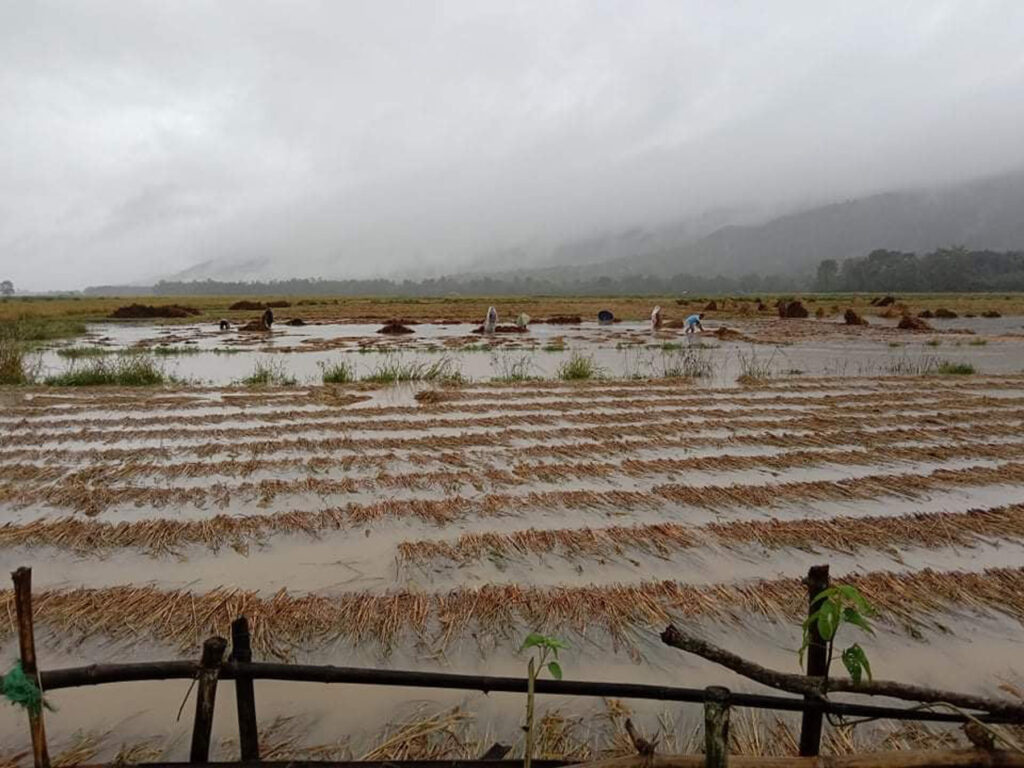
Located in the foothills of the towering Himalayas, Churia District in Nepal faces serious threats from land degradation, erratic weather patterns, and unsustainable human activities.
Most farmers in this district are subsistence farmers who rely on small plots of land to grow cereal crops, such as rice and maize, to support their families year-round.
Despite accelerating climate change, many farmers still rely on traditional agricultural practices, leaving them at greater risk of losing their vital crops due to erratic weather patterns.
Using rice straw as mulch
The “Building Resilient Communities in Churia District, Nepal” project addresses; Through the Farmer Field School, climate-related vulnerabilities are identified through comparative trials of different crop varieties, assessing their performance throughout the crop cycle and helping farmers identify the varieties best suited to new local conditions and the impacts of extreme weather events.
These pilot fields provide a platform for testing new technologies, enabling farmers to observe, adapt, and adopt innovative practices in real-world settings.
One such technique involves using rice straw as a soil mulch to retain soil moisture during the dry season. Previously, farmers burned this straw, eliminating nutrients and beneficial soil microorganisms and causing serious air pollution. This simple technique allows the soil to retain more water, saving significant amounts of this precious resource.
Through the training, Khilamaya Nepali learned techniques for increasing production on small plots of land. She applied these methods in her backyard garden, using the small amount of land she had to test her skills.
And refine it. “We used to follow traditional farming techniques and practices,” she explains. “But after the training I received at the field school, I learned a lot.” The specialists taught us how to produce liquid fertilizers using local materials, i also learned how to prepare organic compost.”
Farmer field schools not only introduce modern and accessible agricultural techniques but also promote inclusive participation, ensuring that all farmers—including women, men, and persons with disabilities—have the tools they need for growth and empowerment.
Nebali belongs to Nepal’s Dalit community, which has historically suffered marginalization and caste discrimination.

Inclusivity is critical to the project’s success; 49.9% of beneficiaries come from indigenous communities, and 14.5% are Dalits. Furthermore, women comprise 71% of field school participants.
To date, the project has trained more than 2,000 farmers and helped implement climate-resilient agriculture practices on more than 1,200 hectares of farmland. The project has significantly increased the productivity of many farmers.