Food & Climate
The Government is working on water harvesting in Egypt for use in agriculture and other purposes, especially as the African country suffers from water scarcity and increasing drought severity, which has recurred several times this August.
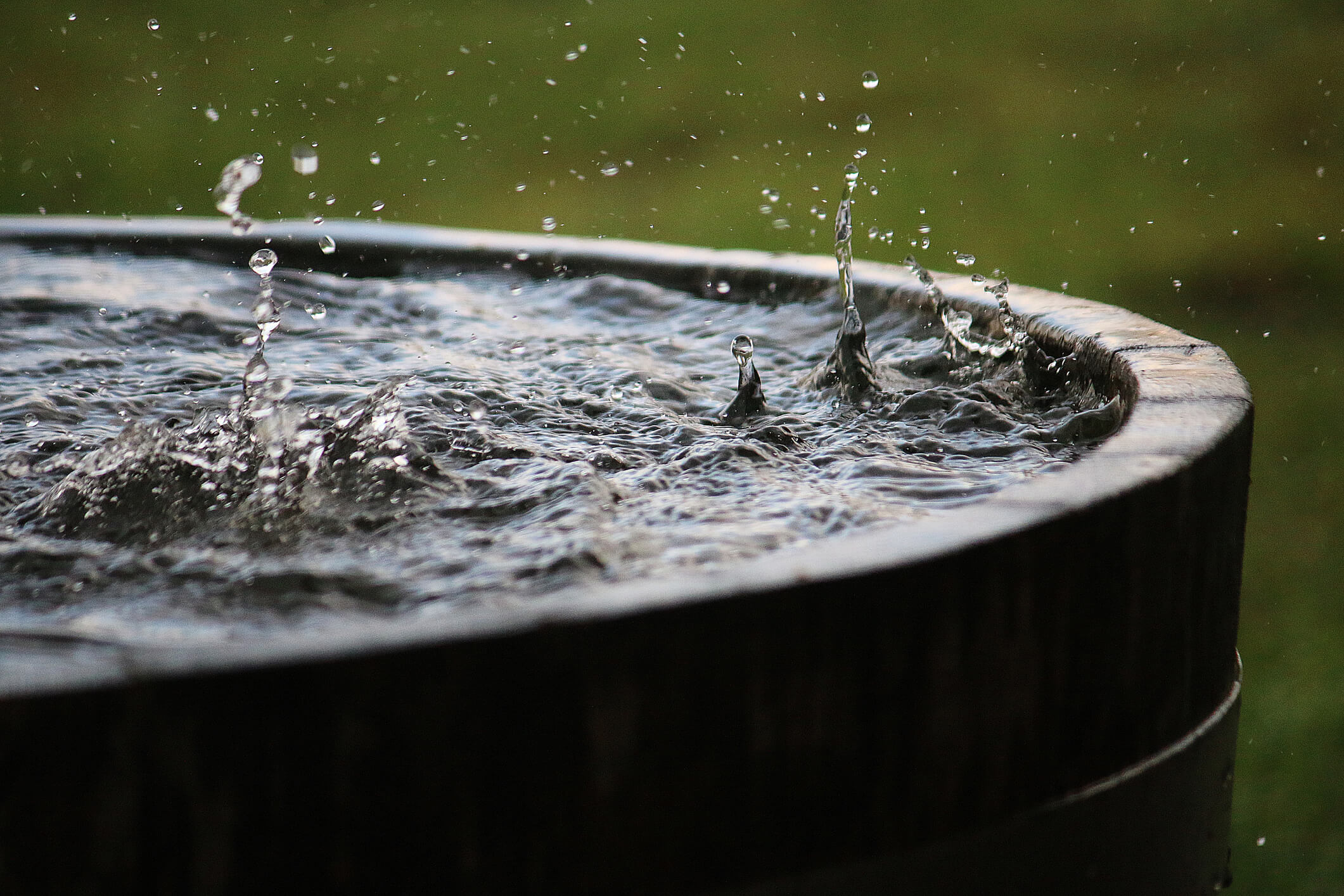
The Ministry of Agriculture and Land Reclamation announced that the Desert Research Center has implemented a group of water harvesting tanks in the Al-Adwaa area in Matrouh Governorate.
This is part of a development plan aimed at maximizing the use of rainwater for drinking, agriculture, and livestock, according to a statement received by “Food & Climate” platform on Saturday, August 23, 2025.
This comes in implementation of the instructions of Alaa Farouk, Minister of Agriculture and Land Reclamation, and under the supervision of Dr. Hossam Shawky, Head of the Desert Research Center, as part of the activities of the Project to Enhance Adaptation in Desert Environments (PRIDE). This project is also part of the center’s efforts to enhance the utilization of natural resources and improve livelihoods in desert communities.
Water harvesting in Egypt with advanced technologies
Engineer Mahmoud El Amir, Director of the Matrouh Sustainable Resources Development Center at the Desert Research Center and Executive Director of the PRIDE Project, confirmed that the project is currently implementing several activities aimed at improving the water and living conditions of residents through the use of advanced water harvesting in Egypt and its storage technologies, in line with the center’s vision to achieve comprehensive and sustainable development.
Engineer Amir Abdel Latif, a well specialist in the Center’s Water and Land Department, explained that there is a significant focus on constructing wells and underground reservoirs in valleys and low-lying areas. Several reservoirs are currently being built in the Wadi El Madour area as part of this year’s plan to improve water use in agriculture and daily activities.
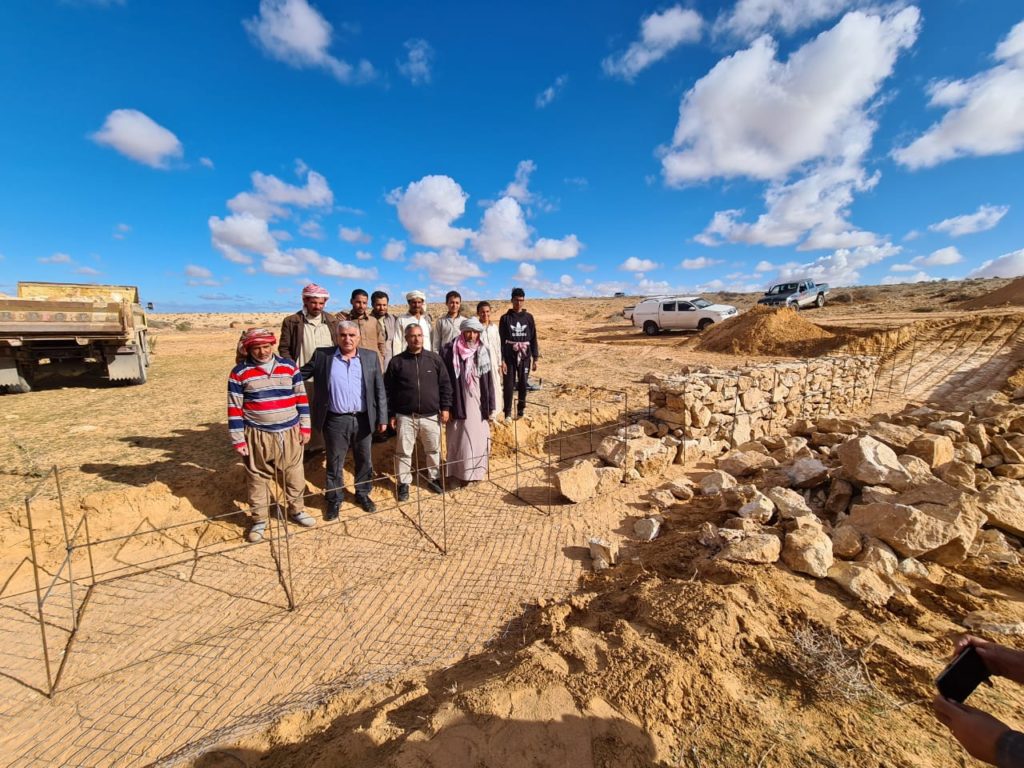
A number of members of the Valleys Associations praised the project, emphasizing that these initiatives have helped achieve water and economic stability for families by providing permanent and reliable water sources for various uses, especially in light of the challenges of drought and resource scarcity.
These efforts are part of the Desert Research Center’s strategy to expand water harvesting projects, contributing to water security and agricultural development in desert areas.
Dams, Reservoirs, and Artificial Lakes
A statement issued by the Egyptian Ministry of Water Resources and Irrigation on August 16 stated that Minister Dr. Hani Sweilem received a report from the head of the Groundwater Sector, Abu Bakr al-Ruby, detailing the response to the recent rainfall in the Sinai Peninsula.
The report explained that, in light of the forecast issued by the Flood Forecasting Center of the Ministry’s Planning Sector regarding the possibility of some areas of South Sinai being exposed to a moderate to severe rainstorm, or sometimes accompanied by thunderstorms, coordination was established between the Groundwater Sector and the operations rooms in South Sinai Governorate for round-the-clock monitoring.
The report reviewed the rainfall situation in South Sinai Governorate on August 12, 2025, when light to moderate rain fell on the city of St. Catherine without any impact.
On the 13th of this month, light to moderate rainfall fell on the city of St. Catherine and the Grundal area in Ras Sudr, causing a moderate torrential flood in the Abu Jaada area.
The flood flowed along its natural course until it reached Dam No. (1). an estimated 300,000 cubic meters of water were harvested in front of the dam, and industrial works in the area were inspected. The situation was found to be safe, and all facilities fulfilled their role in protecting citizens, infrastructure, and facilities in the area.
On the 14th of this month, moderate rainfall fell on the city of St. Catherine, causing a moderate torrential flood in Wadi Al-Arbaeen, one of the valleys that ends near the city of St. Catherine. Given the presence of three mountain lakes previously constructed in Wadi Al-Arbaeen, approximately 15,000 cubic meters of water were harvested. Several flood protection projects have already been implemented in Saint Catherine, including the construction of (1) dam and (2) artificial lakes with a total capacity of approximately 850,000 cubic meters. These projects also include 242 mountain lakes around Saint Catherine with varying storage capacities ranging from 100 to 1,000 cubic meters each, and (5) ground reservoirs with a capacity of 600 cubic meters each.
These projects aim to harvest rainwater to feed surface wells in the area and contribute to promoting sustainable development in Saint Catherine. In Wadi Ghandel in Ras Sudr, (5) artificial lakes and (2) rock dams were constructed with a total storage capacity of approximately 15 million cubic meters.