

Food & climate
Indonesia is seeking to meet its biodiesel and food needs by planting more trees, so that the decision to increase the blending ratio of biodiesel to conventional diesel to more than 55% does not affect palm oil supply and lead to price increases, Indonesian official told Food & Climate, on the sidelines of the meeting of trade ministers of the Group of Eight developing countries (D-8) in Cairo recently.
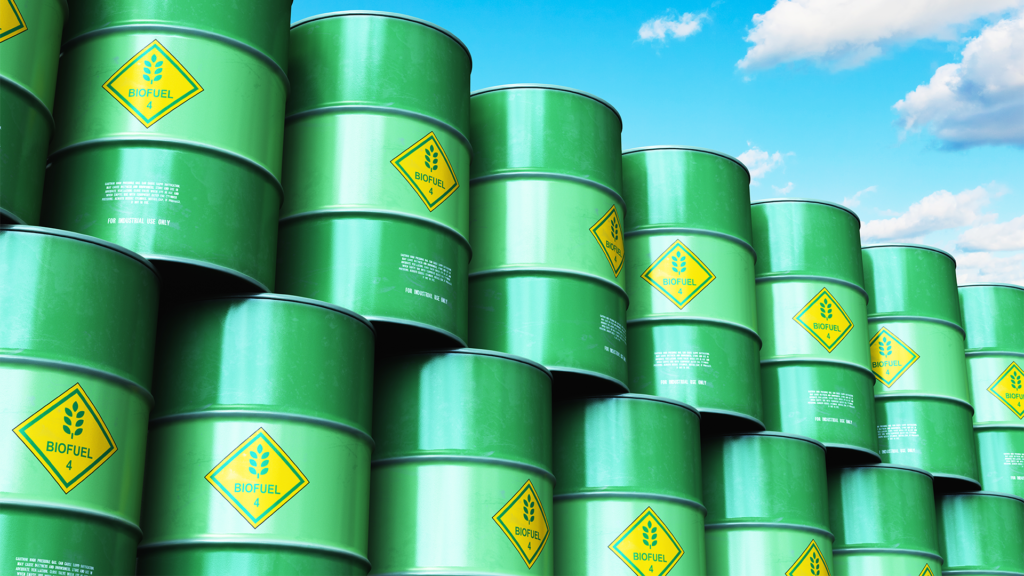
Indonesia decided to increase the blending of biodiesel (made from palm oil) to 60% with gasoline, starting next year. This raised the UN Food and Agriculture Organization (FAO) Vegetable Oil Price Index by 1.4% last August, compared to July, reaching its highest level in more than three years (since July 2022).
The commercial attaché at the Indonesian embassy in Cairo, Muhammad Syahran Bhakti, said that his country, the largest producer and exporter of palm oil products; Indonesia began blending biodiesel with conventional oil years ago.
To mitigate the impact of increasing the blending ratio to 60% starting next year, Jakarta is aiming to boost production and cultivate more palm trees.
The biodiesel blending program began in 2008 at a ratio of no more than 2.5%. Since then, the ratio has increased annually, and according to Bhakti, it is planned to reach 60% in 2026, eventually reaching 100%.
Indonesia and Malaysia produce approximately 85% of the world’s palm oil. Some statistics indicate that the biodiesel market was valued at $36.5 billion in 2022, with 96.4% of its global revenue coming from vegetable oil raw materials.
Cultivating a lot of palm oil trees and energy independence
Commercial attaché at the Indonesian embassy in Cairo, Muhammad Syahran Bhakti, told Food & Climate on the sidelines of a recent event in Cairo that the decision to increase the blending of biodiesel with conventional diesel was aimed at achieving energy independence for the country.
He added, “We cultivate a lot of palm oil trees, and Indonesia is the largest producer and exporter of palm oil. The decision to increase the blending of biodiesel with conventional diesel aims to achieve energy independence for our country.”

In response to a question about how this decision might affect the global price of vegetable oils, he said, “This is related to supply and demand. Therefore, we are striving to produce more palm oil, expand its cultivation, and work together in our country to reduce the costs of all production inputs.”
He continued that Indonesia is not afraid that the decision will weaken food security in the country, noting, “We have been able to achieve stable food security in our country through the cultivation of many crops.
“Regarding the impact of the recent floods that struck Indonesia and caused numerous deaths, Bhakti said, “Indonesia is a tropical country, accustomed to heavy rains and floods, and I believe we will address the effects of the recent floods as quickly as possible.”
Replacing deforestation with palm trees
Commercial attaché at the Indonesian embassy in Cairo, Muhammad Syahran Bhakti, told Food & Climate that deforestation in his country and planting palm trees in their place is not considered deforestation. “These are the trees we uproot, and these are the trees we plant, and they also release oxygen. What do you think? They are both trees. Palm trees are also trees; they can absorb carbon.”
He added, “I think the problem arises when there is competition between palm tree cultivation and sunflower cultivation.”
In response to a question about the greater ability of forest trees like mangroves to absorb carbon dioxide compared to others like palm trees, he continued, “We have a lot of mangrove trees in Indonesia, and Indonesia’s coastline is very long”.
He emphasized, “We are happy with our forests, and every time we experience deforestation, we replant. I believe there is a balance in this matter in Indonesia.”
Bhakti also mentioned his country’s interest in carbon credits, stating, “Indonesia is interested in carbon credits, and I believe we are exploring the possibility of participating in the carbon market and benefiting from it.”
Countries with extensive forests have a significant opportunity to benefit from the carbon market, which has expanded in recent years, due to forests’ ability to absorb large quantities of carbon dioxide from the atmosphere. Numerous studies have demonstrated that mangrove trees possess an exceptional capacity for this.