
Food & Climate
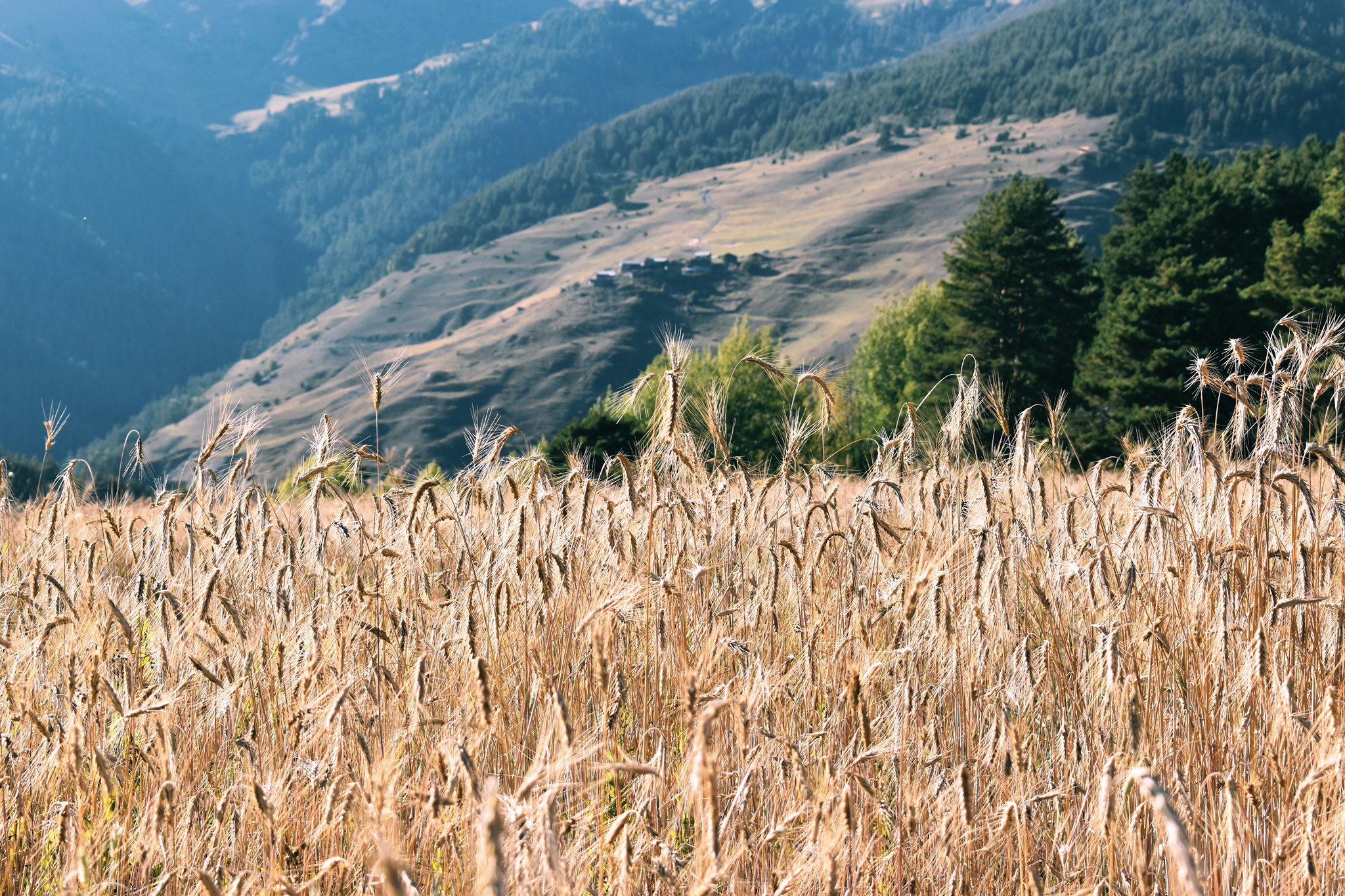
Farmers have discovered that growing Georgian traditional wheat varieties means higher yields and greater disease resistance, thanks to their adaptation to climatic conditions over generations.
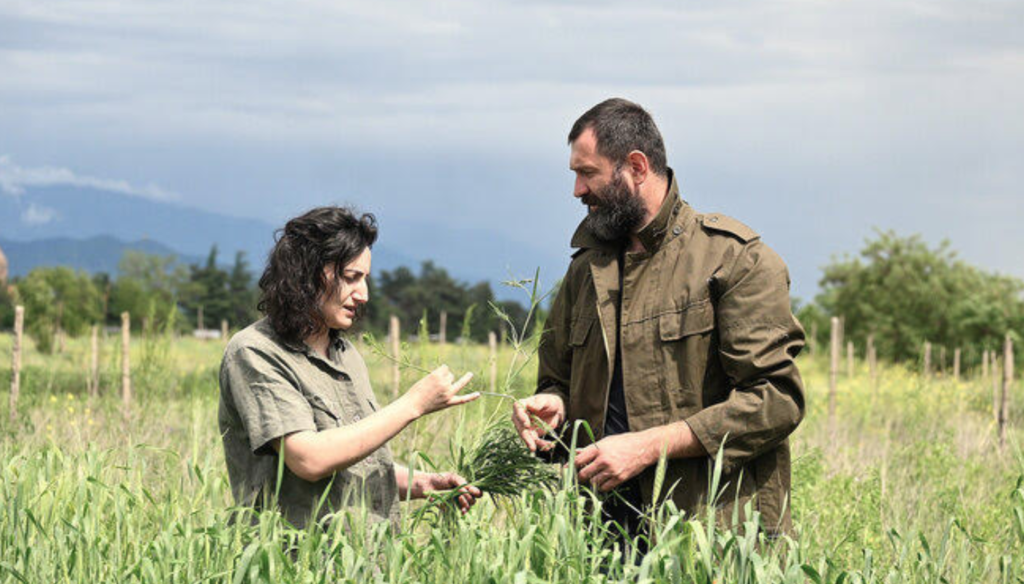
One such farmer is Natia Matcharashvili and her husband Shota, who decided to move their family back to the village of Zemo Alvani from the capital, Tbilisi, to be closer to nature, especially for their children. Shota often dreamed of following in his grandfather’s footsteps and becoming a farmer.
He felt that reviving Georgian traditional wheat varieties, which were gradually disappearing from their homeland’s fields, was his mission in life.
“It is our responsibility to protect these traditional wheat varieties that have adapted to our soil and climate for generations,” she said. “We wanted to live in harmony with nature and share our traditions with others,” she explained, explaining the reason for moving to Zemo Alvani.
For the couple, growing these local Georgian wheat varieties, which are used to make the fresh bread and biscuits they sell in their bakery, is a way to share their heritage with their customers.
“What started as a simple desire has become a source of livelihood for us,” Macharashvili explains.
“We have grown some of these [native varieties] and tasted them, and now we want to continue to discover more of these forgotten Georgian varieties and revive them,” according to a report by the Food and Agriculture Organization of the United Nations (FAO), received by “Food & Climate” platform.
Georgian traditional wheat varieties are at risk
Georgia boasts a remarkable diversity of wheat varieties; of the 14 varieties grown in the country, five are native to Georgia itself. But without effective intervention, this living heritage is threatened with extinction.
Georgian traditional wheat varieties are on the verge of disappearing from the country’s fields, replaced by modern varieties developed by professional breeders. The centralized farming pattern that characterized the decades of the Soviet era gave rise to huge state-owned cooperatives that replaced small family farms that had been managed for generations.
So Tamriko Jinjikhadze, an agricultural scientist at the Scientific and Research Center of Georgia, stepped in to reverse this alarming trend of genetic diversity loss.
“Some of our country’s most important crop varieties are disappearing silently,” she says.
To save Georgia’s vanishing crop varieties, the agricultural scientist has applied for support from the Benefit-sharing Fund, a funding mechanism of the International Treaty on Plant Genetic Resources for Food and Agriculture.
The Treaty, hosted by FAO, uses this fund to support projects that develop, conserve, and facilitate the exchange of plant genetic resources, such as the Macharashvili and her husband’s project. Using this support, Gingkhada’s team launched field missions to collect seeds from remote areas to identify local varieties still cultivated by small farmers.
On one of these missions, Jinjikhadze met Shota and his wife for the first time. The couple knew they were growing a local wheat variety, but they didn’t know its name or precise characteristics. The team collected seeds from the couple’s field to identify the variety in the laboratories of the Scientific Center for Agricultural Research.
Special Importance
Georgian traditional wheat varieties are of particular interest to farmers in the country, as they often perform better in their native habitats thanks to their adaptation to local climatic conditions over generations of cultivation.
For example, Georgian traditional wheat varieties are characterized by greater resistance to fungal diseases and better yields than other varieties. Georgian wheat varieties are a valuable genetic treasure, carrying unique genes that allow them to adapt to the local environment.
“These varieties provide the starting material for developing wheat varieties that are resilient to climate change and emerging pests and diseases,” says Jinjikhadze.
Preserving local crops on farms and in genebanks around the world ensures that farmers and scientists alike can continue to use these resources sustainably for food, research, and innovation.
The journey of these ancient seeds did not end in Georgian soil. Gingkhada and more than 200 samples of traditional Georgian varieties traveled with them from remote mountain villages in Georgia to the Arctic Circle, home to the world’s largest seed bank.
Among these varieties are Lagoedkhis Gdzeltavtava and Dolis Puri, two local varieties found in the fields of the Georgian farmers.
The Svalbard Global Seed Vault, located in the far north of Norway, about 2,000 kilometers north of the capital, Oslo, is temperature-controlled at minus 18 degrees Celsius to ensure the long-term viability of the seeds.
The vault houses copies of seeds from around the world, preserving the world’s food supply for the future.
“It’s reassuring to know that our local varieties are safely stored in Svalbard,” says Shota. “It gives me confidence about the future.”
By linking field crop conservation with gene banks, including through storage in the Svalbard International Seed Vault, farmers and scientists, with support from the Benefit-sharing Fund project in Georgia, are helping ensure that local seeds remain available for future generations.
This measure is especially important at this time, as climate change and environmental challenges are eroding genetic diversity. Therefore, preserving crop varieties, through methods such as safe storage in gene banks and the Svalbard International Seed Vault, is more urgent than ever.