

Food & Climate
Coffee prices have seen significant increases since last year, which many analysts attribute to climate change and the impact of weather phenomena on the trees of this grain, one of the world’s most traded commodities, particularly drought in major producing countries. However, an Indonesian official told “Food & Climate” that the climate is not responsible for these increases.
In March 2025, a report issued by the Food and Agriculture Organization of the United Nations (FAO) stated that global coffee prices reached their highest level in several years during 2024, jumping by 38.8%, “driven mainly by extreme weather affecting major producing countries.”
According to the FAO’s report “Global Coffee Market Trends, December 2024,” Arabica coffee, a high-quality variety favored by roasters and ground coffee markets, was selling for 58% more than in 2023, while Robusta coffee, primarily used for instant and blended coffee, saw a 70% price increase.
The FAO outlined the reasons for this price surge, which align with the views of many analysts outside the organization. These reasons include limited export volumes from Vietnam, reduced production in Indonesia, and unfavorable weather conditions affecting coffee production in Brazil.
Coffee Prices Soar
The FAO reported that prolonged dry weather in Vietnam reduced production by 20% in 2023/24. In Brazil, hot and dry conditions led to successive downward revisions to production forecasts for 2023/24, with official estimates shifting from a projected 5.5% year-on-year increase to a 1.6% decrease.
The situation was similar in Indonesia, according to the report. Coffee production in 2023/24 fell by 16.5% year-on-year due to heavy rains in April-May 2023 that damaged the coffee cherries, and exports declined by 23%.
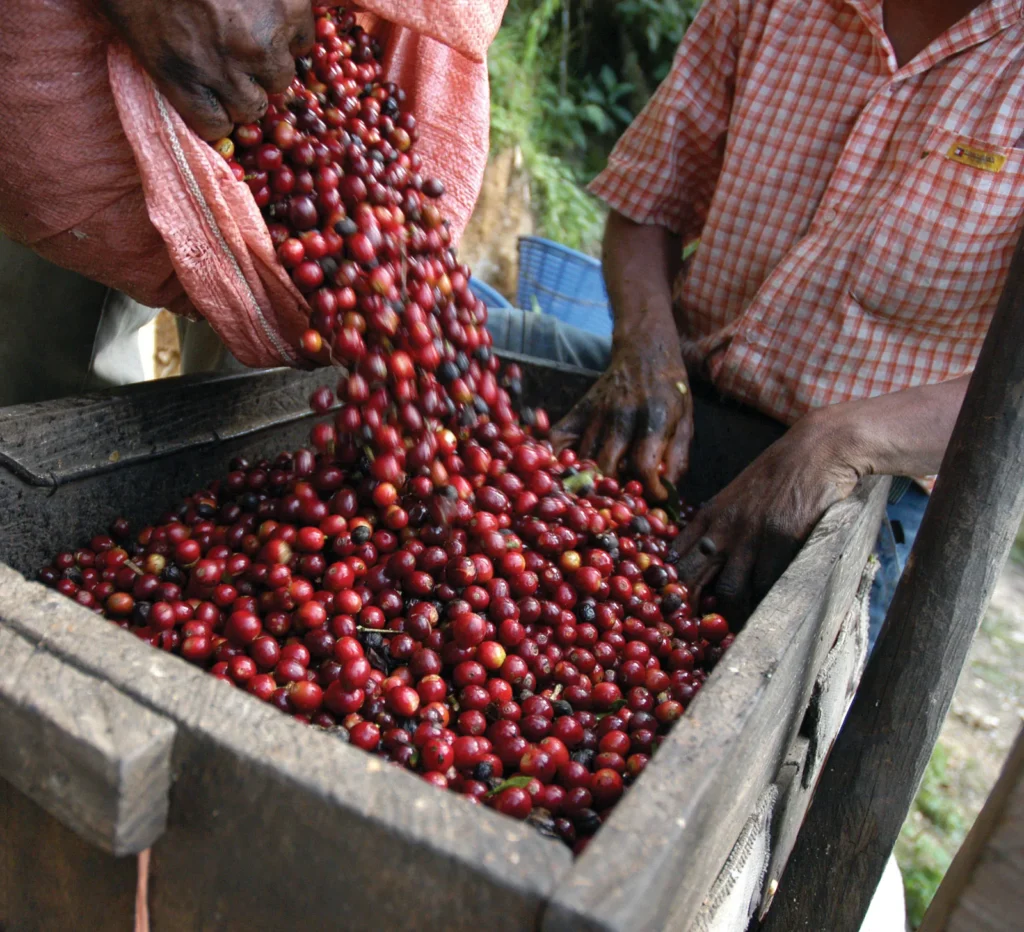
However, the commercial attaché at the Indonesian embassy in Cairo, Muhammad Syahran Bhakti, denied any connection between the weather and the rise in coffee prices in the markets, or that it had led to a decrease in production.
He said to “Food & Climate”, on the sidelines of the meeting of trade ministers of the Group of Eight developing countries (D-8) in Cairo recently: “Indonesia is a country with vast areas of land, and coffee is grown throughout the country. If the weather is not suitable in one location, the harvest in other areas compensates for the shortfall.”
In response to a question from “Food & Climate” regarding whether he could confirm the information reported by the UN and all international media outlets, he posed another question: “Have you ever felt a decrease in the supply of coffee in the markets recently? No, this is proof that production is stable.”
Perhaps no one has felt a decrease in coffee products in the markets, but everyone has felt the soaring coffee prices , which have skyrocketed since last year.
However, Bhakti clarified that his country’s production has not decreased at all, on the sidelines of an event recently held in Cairo.
Fourth largest global producer
Indonesia is among the top five coffee-producing and exporting countries in the world, ranking fourth, just after Brazil, Vietnam, and Colombia.
According to figures from the Indonesian Statistics Agency (BPS), coffee production reaches 5,000 tons annually.
The commercial attaché at the Indonesian Embassy in Cairo, Muhammad Syahran Bhakti, stated that the main reason for the increase in coffee prices in recent months is traders who have hoarded coffee products to manipulate prices.
“Production has not decreased, but traders have caused the price increase,” he said.
He added, “Sometimes other factors, such as transportation and shipping costs, have an impact. Indonesia’s export capacity is facing difficulties. Production is large, but exporting by sea is challenging, which is why coffee prices sometimes rise.”
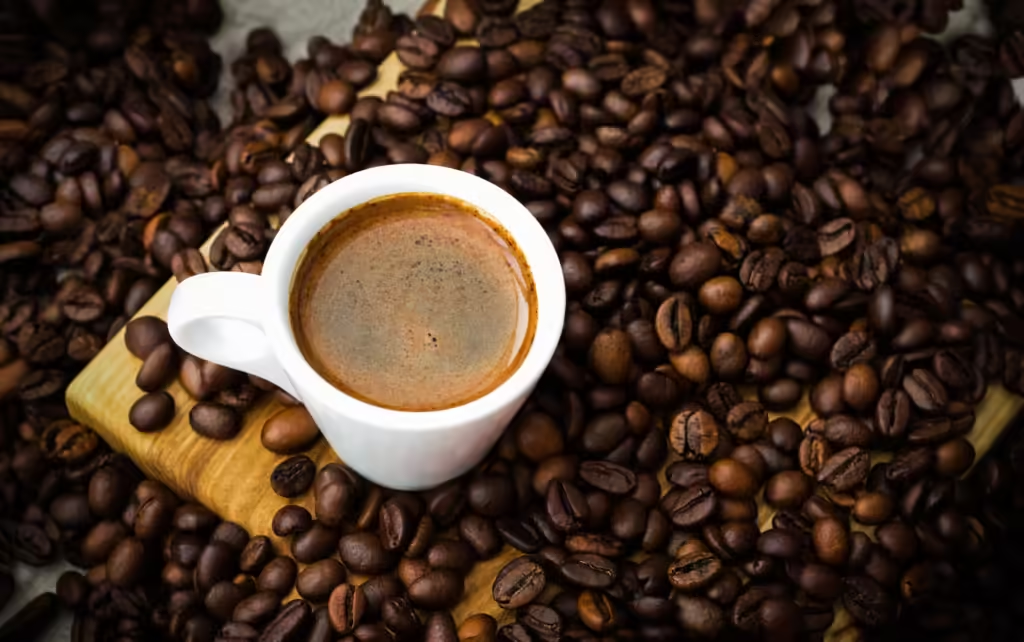
He explained that Indonesia primarily produces Robusta coffee, in addition to Arabica. Countries mostly buy Arabica coffee from Brazil because of its lower price compared to Indonesian production.
The rising value of the dollar against the Brazilian real makes it cheaper.
He continued, saying that many countries produce Robusta coffee, such as Vietnam, “However, Indonesian production is exceptional. If you make Turkish coffee with it, it produces a wonderful foam, which is a favorite among Egyptians. Only Indonesian coffee can produce such a nice foam.”